Restorative Justice Action Plan Quarterly Report: 1st January – 31st March 2026
This report updates on the progress and delivery of the Restorative Justice (RJ) Action Plan for the reporting period of 1 January – 31 March 2026. An annual report for the period 1 April 2025 – 31 March 2026 will be available shortly. All previous quarterly and annual reports are available on the CJS Learning Hub.
Outcome 1: Restorative Justice is available across Scotland
Restorative Justice test cases
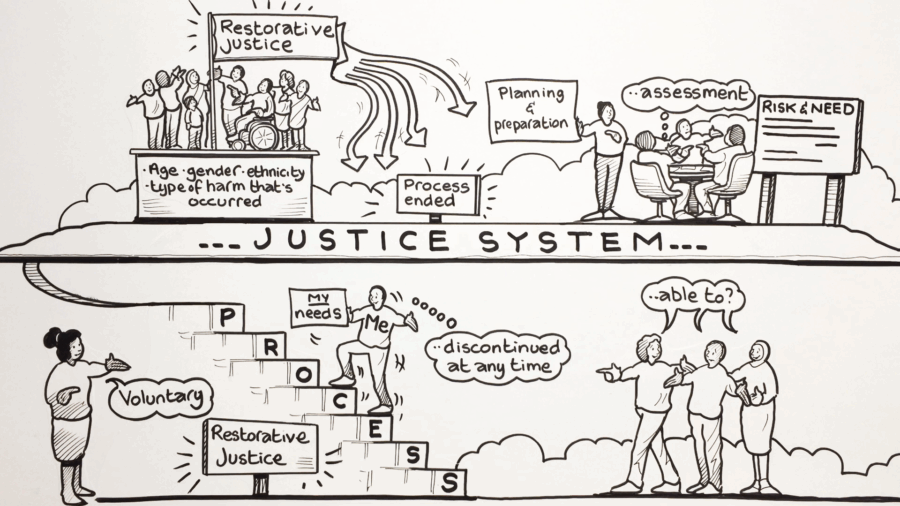
This quarter marked a significant milestone for restorative justice in Scotland, with the publication of the Restorative Justice Test Case Project Summary Report on 12 March. The project, delivered jointly by Community Justice Scotland (CJS) and the Children and Young People’s Centre for Justice (CYCJ), brought together learning from the 2024/25 Test Case Programme and explored the key issues that need to be addressed to support the development of a nationally consistent restorative justice service.
The report highlights themes such as service infrastructure, referral pathways, workforce development and accessibility, and has been well received by partners across the sector. It has been shared widely through CJS and CYCJ networks and Scottish Government colleagues, with strong engagement online and positive feedback from those involved in the test cases. Findings from the project were also presented to the National Youth Justice Advisory Group, and CJS and CYCJ have been invited to present a poster on the work at the European Forum for Restorative Justice Conference in Poznań, Poland, later this year.
Restorative Justice Development Forum
The Restorative Justice Development Forum continued to provide a valuable national space for leaders and practitioners to share learning and address common challenges in developing restorative justice locally.
Two meetings took place this quarter. In February, the Forum welcomed Clair Aldington from Space2Face in Shetland, who shared insights on working with everyone affected by crime and harm. In March, Sacro colleagues Kerry Page and Kathleen Ritchie presented on their youth restorative justice services and the national STOP hate crime service for young people. Both sessions prompted rich discussion and reflection from members.
Ongoing demand for the Forum has led to sessions being extended to 90 minutes, allowing more time for learning and discussion. The next meeting takes place on 2 June 2026, with input from Paul Delany at the Cornmarket Project in Wexford. If you would like to join the forum, please contact Lauren Emmerson or Michael Purves.
Restorative Justice Service Directory
Work to develop a national restorative justice service directory continued this quarter. Significant engagement with stakeholders has helped clarify user needs and identify the challenges and opportunities associated with different hosting options.
CJS and CYCJ have drafted an options paper outlining progress to date, which will be discussed by the Advisory Group before being shared with the Scottish Government. Alongside this, meetings with Victim Support Scotland and Police Scotland explored the potential for a closed pilot to test the proposed tool and align it with wider national digital work, including the Victims’ Taskforce.
Restorative Justice Approaches Group
The Restorative Approaches group met on one occasion this quarter. This was the first opportunity to regroup and reflect on the work the group achieved in 2025 and look forward to planning for the next year. Membership of the group has expanded with representatives from Police Scotland and Public Health Scotland keen to join the discussion.
Stakeholder Engagement
This quarter, CYCJ and CJS continued extensive engagement with national and local partners to support the development and embedding of restorative justice across Scotland. This included discussions with Scottish Government colleagues on the Children’s Hearings Redesign, highlighting opportunities to build awareness of restorative justice through enhanced training for panel members and chairs.
Significant progress was also made in analysing learning from the November stakeholder event Restorative Justice in Scotland: A Day of Reflection, Learning and Action. Work is underway to finalise a report outlining key themes and recommendations to overcome barriers to access and provision, which will be shared with Scottish Government and published next quarter. This learning will also directly inform the forthcoming Options Appraisal.
Engagement during the quarter extended to secure care providers, Victim Support Scotland, the Retail Crime Task Force, NHS Services, local Early and Effective Intervention (EEI) and youth justice teams in Dundee and South Lanarkshire. These discussions explored opportunities for increasing awareness and access to restorative justice for adults as well as children and young people, including those in secure care and those affected by retail‑related harm. Close partnership working between CJS and CYCJ continues to underpin this work as planning progresses for the next phase of restorative justice development.
If you or your organisation is interested in a tailored restorative justice input or presentation, we’d be happy to join your meeting or event to share insights and support your work. Contact us on Chloe Boullier-Richards and Lauren Emmerson.
Learning From Practice: UK and Ireland RJ Visits
In February and March 2026, the CJS team carried out a series of fact finding visits to restorative justice services across the UK and Ireland. The visits explored costs, accreditation models, referral pathways and delivery approaches, helping to inform the forthcoming options appraisal for restorative justice in Scotland.
Visits included meetings with services in Shetland, Northumbria, Dublin, Wexford, and Belfast, including third-sector organisations, probation services and police based victim support teams. Several visits have been followed up through online meetings, with further learning visits planned in the coming months.
We are grateful to all the organisations who generously shared their time, experience and insight.
Outcome 2: Restorative Justice is delivered by highly trained and skilled facilitators
Restorative Justice Policy and Practice Framework
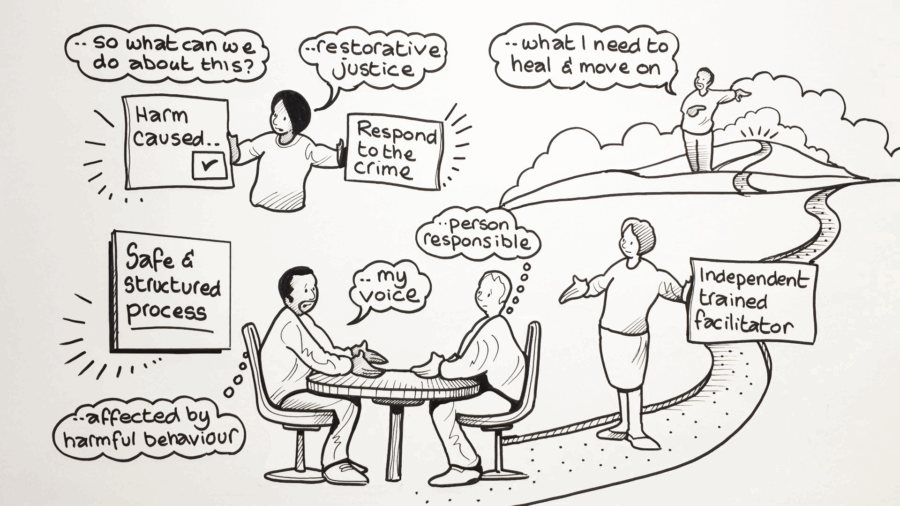
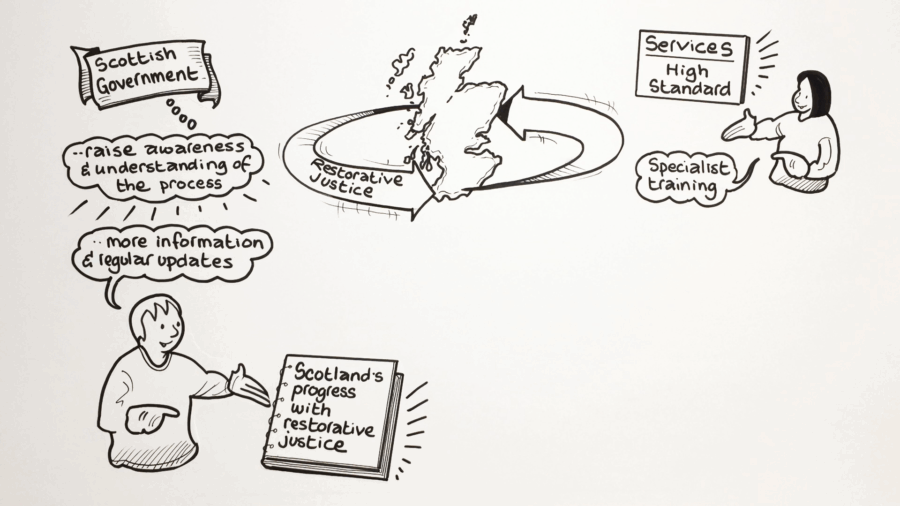
This quarter saw the publication of the Restorative Justice Policy and Practice Framework, which sets out clear minimum standards and expectations to support safe, consistent and high‑quality restorative justice practice across Scotland.
CJS and CYCJ also continued to engage with the Restorative Justice Forum and have been invited to present the Test Case Project Summary Report at the next Scottish Network of Restorative Justice Researchers (SNRJR) meeting.
Restorative Justice Online Learning Module
The RJ eLearning Module has been developed by CJS for frontline, operational staff on restorative justice. The content was written by Prof Tim Chapman and Tania Nascimento, designed to offer a basic introduction to and overview of restorative justice.
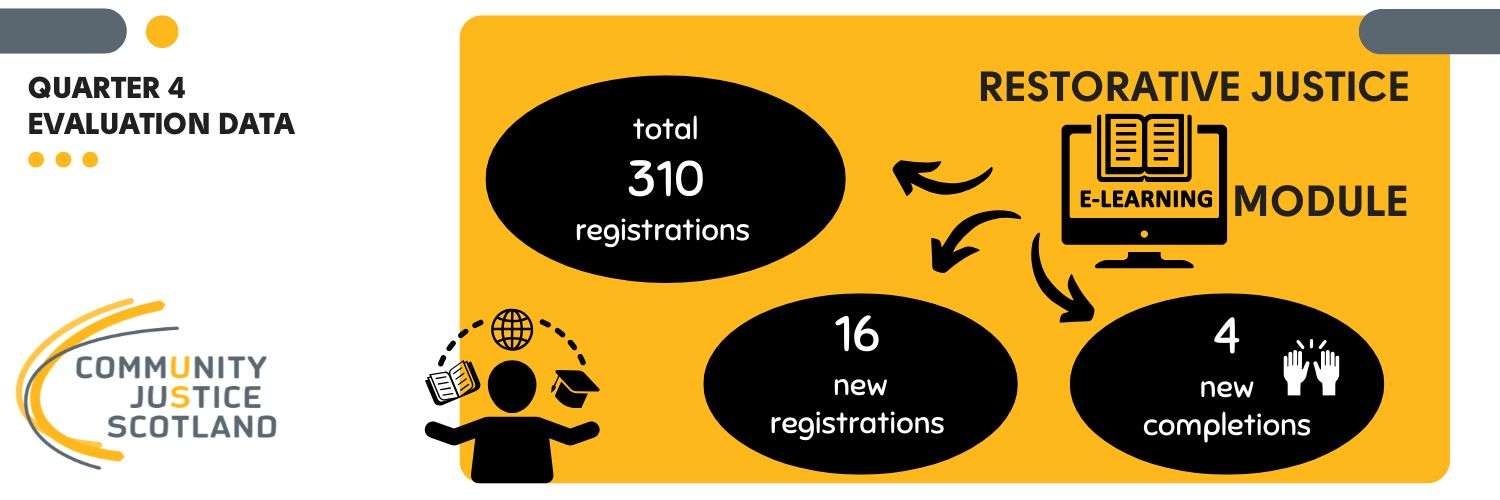
The module is available for stakeholders and the public and can be accessed via both the RJ Learning Hub and Resources section on CJS website.
Restorative Justice Training
Training was delivered to eight practitioners from the City of Edinburgh Council Justice Teams over four days in March, strengthening the capacity of the Edinburgh Restorative Justice Team.
Restorative Justice Practitioners’ Network
CJS continues to chair the Scottish Restorative Justice Practitioners’ Network, bringing together practitioners, those awaiting training or practice opportunities, and others with an interest in restorative justice.
The Network met on 17 February 2026 to share updates on current practice and discuss priorities for the year ahead. The next meeting will take place on 12 May at 10.00am, focusing on creative approaches to restorative justice, particularly at the preparation stage. To take part, please contact Gael Cochrane.
In parallel, CYCJ continues to respond to practitioner enquiries, linking colleagues with the Network as well as relevant training and practice opportunities across Scotland.
Strategic Development of RJ Training and Accreditation in Scotland
CJS, in partnership with CYCJ, continues to assess options for a more strategic national approach to RJ training in Scotland. During this quarter, both teams met to review opportunities and challenges and to consider potential benefits and implications of introducing accredited RJ training. This work remains ongoing.
Outcome 3: There is a public awareness and understanding of Restorative Justice across Scotland
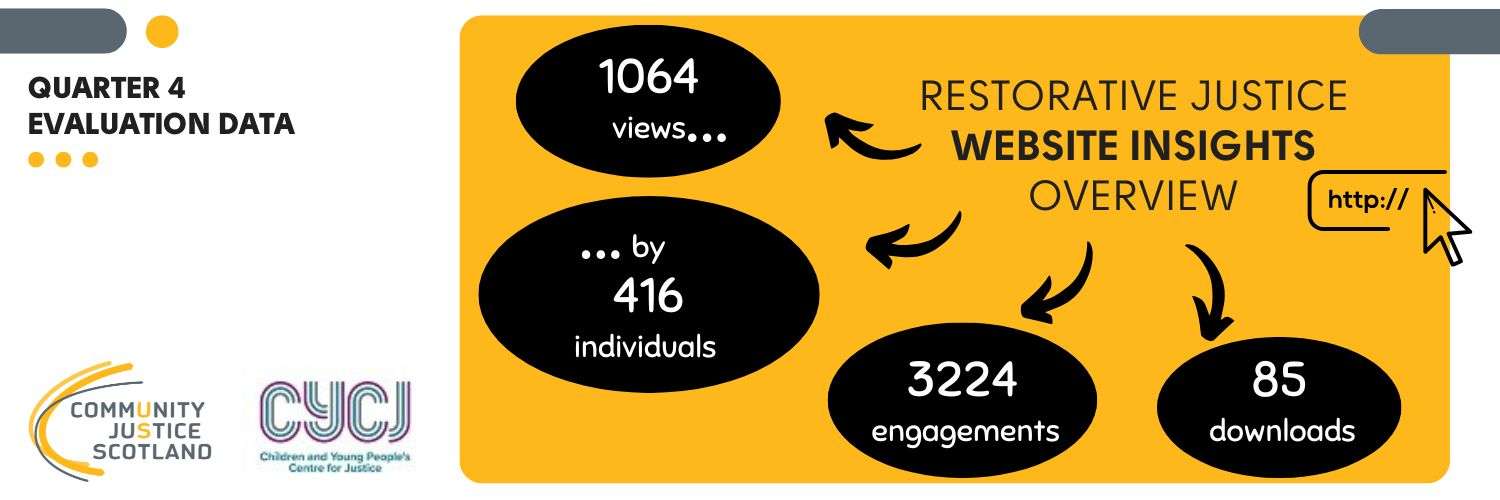
Digital Engagement
Balancing the Rights of Children who Harm and those who are Harmed
On 10 February CYCJ chaired and hosted a webinar Balancing the Rights of Children who Harm and those who are Harmed where Judy Warburton, SCRA, presented recent research identifying how the needs and experiences of individuals harmed by children could be better met, explored how the rights of children who cause harm and those of the children they harm can both be fully realised within the Scottish Youth Justice system, and identified support for restorative justice expressed amongst both victims and young people. This event attracted the largest ever number of attendees to a CYCJ webinar.
The Power of Dialogue: Human Stories of Restorative Justice
In March, CJS hosted The Power of Dialogue: Human Stories of Restorative Justice in Edinburgh. The event featured powerful reflections from Jacob Dunne and Lynn Burns, who shared their personal experiences of harm, accountability and restorative dialogue.
Their testimony, alongside practitioner insight and excerpts from the acclaimed play Punch, offered a moving exploration of how restorative justice can support accountability, learning and human connection, even in cases of severe harm. A recording of the event will be available shortly for those unable to attend.
Lived-Experience Short Film
This quarter marked the completion of production on the restorative justice short film, which developed from work undertaken during the Test Case Project. The film grew out of a restorative process in which an RJ facilitator supported a person with lived experience of harm to write a letter to the person who harmed them, with that journey forming the basis of a powerful narrative.
The filming process was a deeply moving experience for everyone involved, and we are grateful to all those who contributed with such care, honesty and generosity. We look forward to sharing the finished film with partners and stakeholders soon, and to using it to support greater understanding of the human impact and potential of restorative justice.
Strengthening access, participation and voice
This quarter, CYCJ continued to focus on expanding access to restorative justice and ensuring the voices of those affected by harm are meaningfully embedded within policy, practice and service development. This included responding to the Scottish Government Consultation on Secure Care and the Single Point of Contact (SPOC), highlighting the opportunity the SPOC presents as a gateway to increased access to restorative justice services and improved awareness of their benefits among diverse groups.
Alongside this, CYCJ met with CELCIS to explore potential restorative justice pathways for adult survivors of childhood abuse and harm in care as part of the Scottish Government’s Redress Scheme.
CYCJ have also been progressing work on a Restorative Justice Participation Gold Standard, which will be published following initial testing with care‑ and justice‑experienced young people. The Gold Standard is intended to support those designing or delivering restorative justice services for children and young people, setting out statutory participation duties and offering practical guidance to support meaningful and inclusive practice.
Team update
Following almost four years with Community Justice Scotland, Inesa Velaviciute, Restorative Justice Project Officer, has now left CJS. During her time with the organisation, Inesa brought immense passion, commitment and expertise to restorative justice and played a key role in raising awareness and understanding of RJ across Scotland. We thank Inesa for her significant contribution and wish her every success in her next role.
After leading the Restorative Justice team since May 2025, Hannah Dickson has returned to her substantive role as Improvement Lead, following a highly successful period as Head of Projects and Restorative Justice. We are very grateful to Hannah’s leadership during this time and are pleased that she will continue to work closely with the RJ team throughout the Options Appraisal process.
We are also pleased to confirm that Gemma Fraser will return to her role as Head of Restorative Justice on 1 May 2026.
Contacts
Community Justice Scotland
- Gemma Fraser – Head of Insight and Intelligence and RJ
- Chloe Boullier-Richards – RJ Project Lead
- Michael Purves – RJ Administrative Officer
- Gael Cochrane – Learning Development & Innovation Lead, RJ Practitioner
The Children and Young People’s Centre for Justice
- Lauren Emmerson – RJ Practice Development Advisor
- Pamela Morrison – RJ Practice Development Advisor