The Level: a new protocol for preventing system failure where it hurts people most
Jamie Milne, Policy and Communications Advisor at Homeless Network Scotland, explains the purpose of The Level, a protocol for delivering services to prevent severe and multiple disadvantage, backed by more than 50 organisations including Community Justice Scotland.
NOTE: The views expressed are of the author and do not necessarily represent the views of Community Justice Scotland and other organisations that may be mentioned.

People don’t live their lives in neat boxes. And when life gets complicated, people often need more than one kind of help. A safe home. Support with mental health or recovery. Help with money or navigating the justice system.
But our systems of services are not set up to deal with complexity. The Level aims to dismantle this siloed system. Here’s why.
Everyone agrees that a ‘no wrong door’ approach to joining up services is the right way to go so people don’t get passed from door to door. But despite plenty of good policy work at national and local level over the years, Scotland has struggled to turn ideas into implementation.
The problem of fragmented service delivery affects us all. But it is especially acute for people dealing with severe and multiple disadvantage (SMD), where experiences such as mental ill health, addiction, homelessness, offending and domestic abuse often overlap.
Siloed services ask people to unpack their crises one box at a time, getting help from each service in turn. But a person dealing with SMD cannot recover in sequence. The result of this mismatch is a self-reinforcing cycle of disadvantage.
Those at the hard edges – the 1 in 28 people in Scotland suffering extreme disadvantage – pay the highest price, often on top of lives shaped by violence, poverty and trauma.
People have to go around services repeating their story and trauma. Left alone to navigate a complex and bewildering system, they fall through the gaps or – understandably – disengage. Crisis often evolves into a new set of problems.
The other side of this ‘silo tax’ is the pressure on public finances – the additional spending on wider service needs generated by system failure. There is a wider cost in contributions to communities and the economy that are lost to this failure.
At Scotland’s National Summit on Severe and Multiple Disadvantage on October 7 we launched The Level, a delivery protocol for providing consistent support for people facing SMD. It gives practitioners, people who buy services, and policymakers practical tools to prioritise severe disadvantage in their work, enabling local leadership and action.
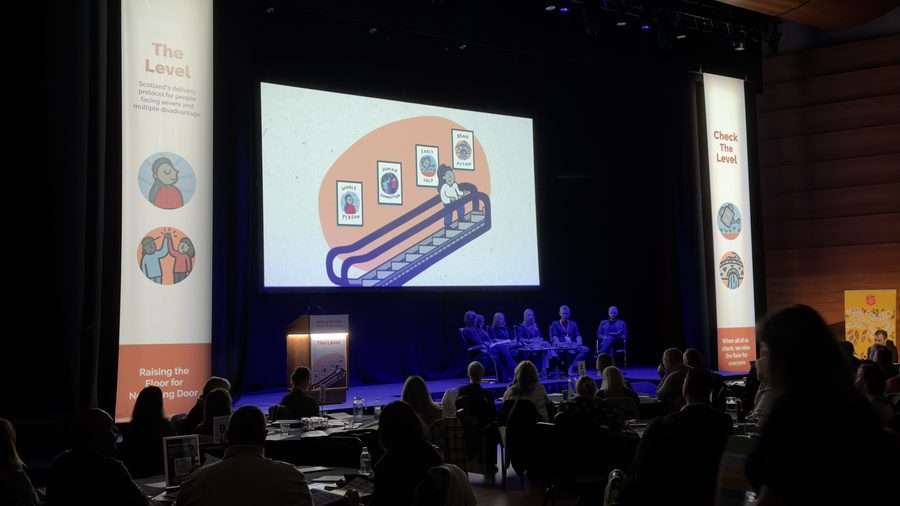
The Level is not another framework or policy competing for existing resources. It is a practical response based on evidence from the No Wrong Door test of change programme, which explored how to provide joined-up services on the ground in four areas.
Partners in the programme came from across academia, services, lived experience, local government commissioning, Scottish Government, independent funders and public health. It was a cross-sector effort, overseen by experts who brought sector specific knowledge and insight, including Community Justice Scotland’s chief executive Karyn McCluskey.
The Level is operational infrastructure that aims to close the gap between good policy and reality. It supplies the missing practical method that turns existing commitments into a consistent approach for people with severe and multiple disadvantage.
The objective is to prevent system failure where it hurts and costs most. By enabling integrated service delivery for people at the hard edges, through a whole system and whole person approach, we can raise the national minimum standard of support for everyone.
- Find The Level along with practical resources, briefings and an economic analysis at: The Level – Homeless Network Scotland: we are all in