Serving the Community in Glasgow
Vacant shop units in Glasgow have been transformed into a charity shop and food pantry, providing vital support for local residents.
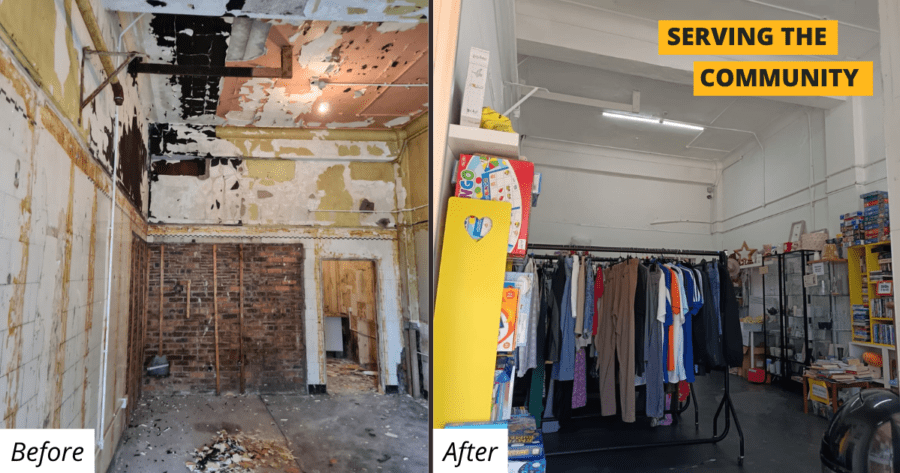
The buildings on Ladymuir Crescent in Pollok had been empty for some time and have now been renovated with the help of people carrying out unpaid work as part of community payback orders. Crookston Community Group secured leases on several of the units in 2024 and revamped them for public use.
Sulaiman Aminy, project manager for Crookston Community Group, said community payback teams had been central to the project.
He said: “Over the last two years, unpaid work teams carrying out community payback orders, have played a major role in transforming these spaces.
They’ve contributed hundreds of hours of work – from clearing and decorating to repairs, flooring and assembling furniture. Without that support, we couldn’t have got to where we are today.
They’re still helping, with unpaid workers carrying out a variety of tasks when needed including sorting donations in the charity shop, food items in the pantry and helping members of the community pick the food they need. The new facilities now include a charity shop offering low-cost and free items for those in need, as well as a food pantry and FareShare distribution hub providing affordable food and emergency support to local families.
Plans are also in place to develop a community wellbeing hub in the units, subject to funding. The space would offer activities for older people, people with disabilities and those experiencing loneliness, including social groups, creative sessions and digital skills support.”
Sulaiman, added: “The transformation work took place over almost two years and would not have been possible without the commitment and hard work of the unpaid work teams. Their contribution has helped turn empty and neglected buildings into vibrant community assets that will benefit local residents for many years to come.
The feedback from community members has been extremely positive. Many local residents have expressed their appreciation for seeing previously unused buildings brought back into use for the benefit of the community. People have welcomed the increased access to food support, affordable goods, and social activities, while participants involved in the unpaid work have reported feeling proud to have contributed to projects that create a lasting positive impact in their local area.
The projects demonstrate how community payback order unpaid work can make a meaningful difference, not only by improving physical spaces but also by strengthening community wellbeing, reducing isolation, and supporting vulnerable residents.”
Across Scotland, more than 12.5 million hours of supervised unpaid work have been completed since 2011 as part of community payback orders.
In Glasgow there have been 153,000 hours of unpaid work carried out across the city in 2025/2026 which have led to improvements that have included outdoor spaces and support for community groups.
Margaret Smith, manager at Glasgow City Council’s Community Justice Glasgow team, said:
“Community sentences change lives, holding people accountable while keeping them connected to treatment, employment, family, structure and other factors known to effectively support rehabilitation. This reduces the risk of further offending and provides much better outcomes for individuals and our city.
Evidence shows that community sentences are often more effective at reducing reoffending and less costly than short-term prison sentences. Carrying out unpaid work ensures that people give something back – in many cases transforming public spaces and supporting charity work for the benefit of our communities.”