Reflections from Leuven: Sharing Ideas, Shaping Practice
Inesa Vėlavičiūtė, Restorative Justice Development Officer, and Gael Cochrane, Learning Development and Innovation Lead, share their experiences and inspiration brought from the interaction with fellow members of the European Forum for Restorative Justice
NOTE: The views expressed are of the author and do not necessarily represent the views of Community Justice Scotland and other organisations that may be mentioned.
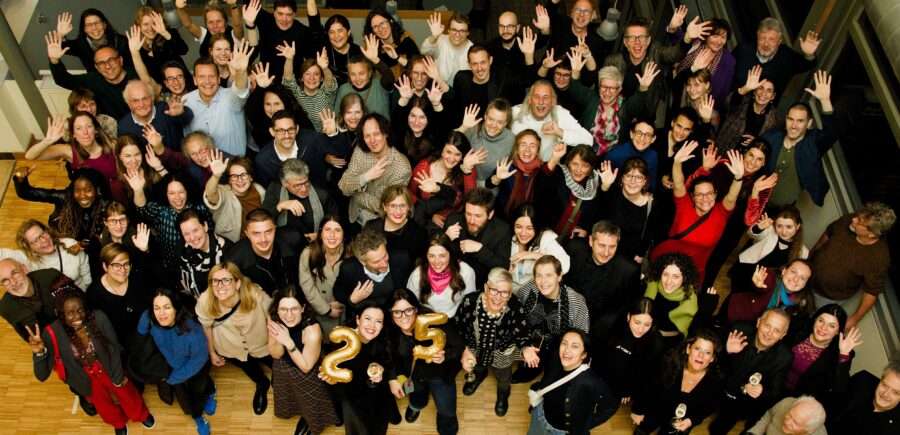
In December 2025, we had the privilege of travelling to Leuven in Belgium to take part in the European Forum for Restorative Justice (EFRJ) Chairs and Co Chairs meeting. It was a full day of conversations, learning, and connection – set against the backdrop of the EFRJ’s 25th anniversary celebrations and the vibrant Restorative Justice and Arts Festival.
Scotland’s contribution to a global Restorative Justice community
Community Justice Scotland is one of the organisations within the EFRJ, a network that brings together restorative justice practitioners, researchers, policymakers, and advocates from across the globe to promote Restorative Justice (RJ). Founded in 2000, and based in Belgium, the Forum supports the development and quality of restorative justice and restorative practices in criminal justice, education, organisations, environment, and other settings. It is widely recognised as a key network linking RJ theory, practice, and policy.
Our contribution to the Forum’s work reflects Scotland’s active voice in these conversations, but also our commitment to learn from the many other voices that shape the wider restorative justice landscape:
- Gael chairs the Training Committee that works on enabling access to high-quality RJ training for practitioners across Europe through sharing of training knowledge and good practice. She is also a member of the Gender-Based Violence Working Group. This group plays a vital role in shaping safe and informed RJ responses to complex and sensitive cases, following evidence-based practice, challenging misconceptions and aiming to improve survivors’ experiences.
- Inesa is a member of the Communications Committee, which acts as an advisory board and support group dedicated to strengthening how the EFRJ communicates restorative justice: shaping strategic messaging, improving visibility of working groups, committees and their work, and promoting a restorative culture across Europe.
The Chairs and Co Chairs meeting itself was a day packed with reflection and collective problem solving. Using plenary discussions and the World Café method – small rotating group discussions – we explored the common challenges that committees and working groups are facing and proposed solutions.
What struck us both was how similar many of our experiences are, despite working in different contexts. Again and again, a core theme emerged:
We need stronger communication and more connectedness across the network.
We explored big questions such as:
- How do we reach members more effectively?
- How can committees and working groups better support each other’s efforts?
- How do we involve external stakeholders who could champion restorative justice?
- How do we make better use of the resources, expertise, and materials already available?
These conversations didn’t just stay at the level of reflection, they quickly turned into ideas, which are now followed by decisions and actions. Throughout the day, we found ourselves inspired by the motivation and commitment around the table – people thinking boldly about how RJ could be communicated, taught, understood, and lived.
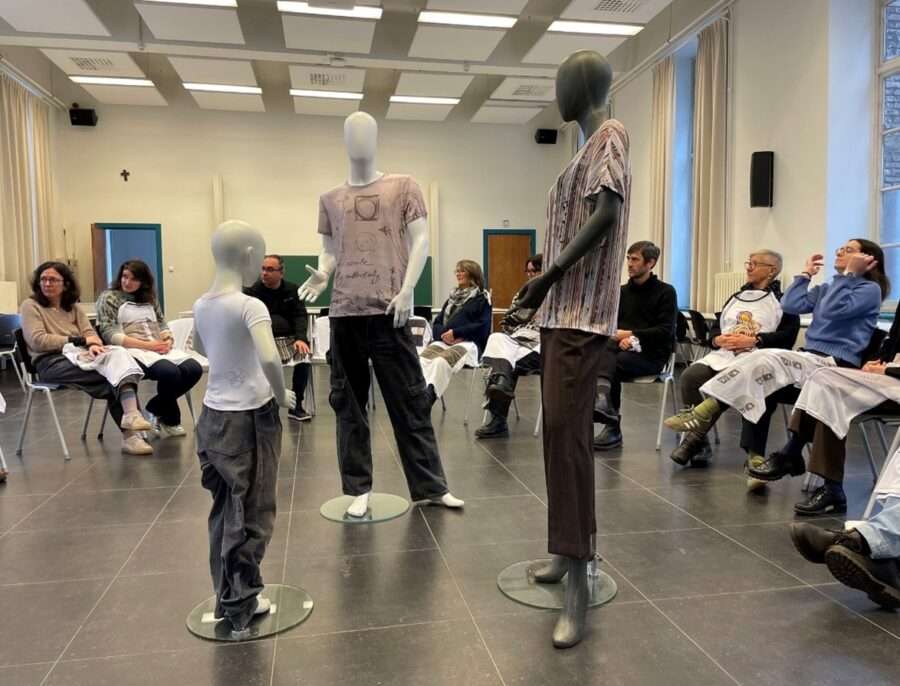
The REstART Festival 2025
What made the trip especially memorable was that the meeting coincided with the Restorative Justice and Arts Festival. Stepping out of structured discussions and into spaces filled with theatre, music, film, storytelling, installations, and exhibitions, we saw how creativity and imagination opens doors to understanding harm, healing, and community in ways that words alone often cannot. For those of us who see strong potential in the intersection of arts and restorative justice, this was deeply energising.
Seeing our work reflected
A proud moment was seeing the Communications Committee’s newly curated magazine on Restorative Justice and Human Rights, presented during the festival period and later launched on International Human Rights Day. Gael’s piece on restorative justice and human rights from a facilitator’s perspective was featured in the publication too, adding a Scottish perspective to this important global dialogue.
Why this international engagement matters
The visit offered an important opportunity for international collaboration, knowledge exchange and strategic planning. For us, it reinforced how such collaboration strengthens local practice. Scotland has much to contribute – but also much to learn from others walking similar paths, ensuring our practice continues to grow in line with international learning and standards.
Being part of the EFRJ keeps us connected, reflective, and forward‑looking. And ultimately, that benefits the communities and people we serve.
- Would you like to learn more about how restorative justice works, its benefits and Scotland’s progress with the development of services? Visit our RJ Learning Hub.