Restorative Justice Action Plan Quarterly Report: 1st October – 31st December 2025
This report updates on the progress and delivery of the Restorative Justice (RJ) Action Plan for the reporting period of 1 October – 31 December 2025. An annual report for the period 1 April 2024 – 31 March 2025 is available here. All previous quarterly and annual reports are available on the CJS Learning Hub.

Outcome 1: Restorative Justice is available across Scotland
Restorative Justice Test Cases
This quarter marked the completion of the 2024/25 Test Case Project, which examined existing RJ services and current RJ practice to inform service development across Scotland.
The full report, including cost data associated with test cases, was submitted to the Scottish Government in early November. A high-level summary intended for publication has also been produced and will be shared with the Scottish Government in January 2026. Key findings from the project have also begun to be shared at stakeholder events, as outlined in the Stakeholder Engagement section of this report.
Restorative Justice Development Forum
The third Restorative Justice Development Forum’s meeting took place on 2 December 2025, attended by 16 members from a range of local authority areas and organisations. This bi-monthly forum is organised and chaired by CJS and CYCJ. It aims to provide a space for leaders in both statutory and voluntary sectors across Scotland to exchange knowledge and practice on the development of restorative justice in their local areas, and to explore ways of overcoming shared challenges and barriers. In this quarter, the forum focussed on presentation of key learning from the recent Test Case Project, incorporating project learning, key findings from practitioners, and recommendations for building awareness, infrastructure, and long-term support for RJ practice.
Demand and interest in the Forum has prompted trialling of an extended time of 90 mins for 2026 sessions, with a programme of upcoming Forum shared with members.
The next forum meeting will take place on 3 February 2026, which will welcome an input from Clair Aldington, Space2Face. If you would like to join the forum, please contact Lauren.Emmerson@strath.ac.uk or Michael.Purves@communityjustice.scot
Restorative Justice Service Directory
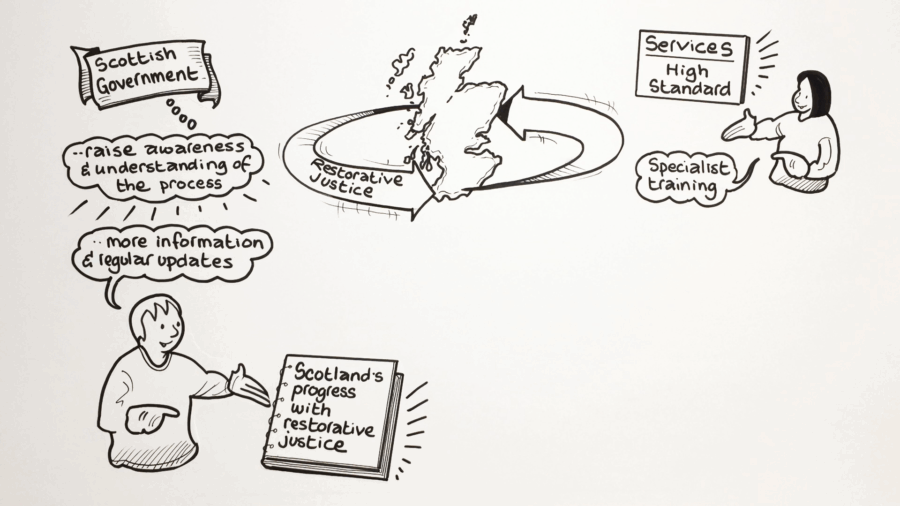
Work to develop a national directory of RJ service providers for adults and children in Scotland continues. The short-term advisory group, co-chaired by CYCJ and CJS, met this quarter, and extensive engagement work with a range of stakeholders was undertaken to identify essential user needs and to assess the challenges and opportunities associated with potential host platforms. With support from the RJ Directory Advisory Group, a set of options is expected to be submitted to the Scottish Government by the end of the next quarter.
Stakeholder Engagement
CJS and CYCJ have continued to raise awareness of RJ across Scotland through targeted engagement with local authorities, third sector organisations, and a range of national and international stakeholders.
Alongside practitioners from two local authorities delivering RJ within their approach to harm caused by children and young people, CYCJ presented at the Early & Effective Intervention (EEI) Practitioner Forum in October. This session involved productive discussion with a range of EEI practitioners and resulted in tailored support being provided to those seeking to develop RJ practice locally. CYCJ will continue to support this developing work in East Renfrewshire and Dundee as required.
CYCJ also continues to support the Scottish Network of Restorative Justice Researchers (SNRJR) by attending and contributing to their meetings, promoting the network’s activity, and identifying opportunities for collaboration.
CJS continues to support the Edinburgh Hate Crime and Restorative Justice Project as part of its capacity building work across the sector. The team consists of Justice Social Workers from the City of Edinburgh Council, Police Scotland and Victim Support Scotland, meeting bi-monthly to discuss awareness raising about the project, administrative issues, requests for RJ and ongoing cases.
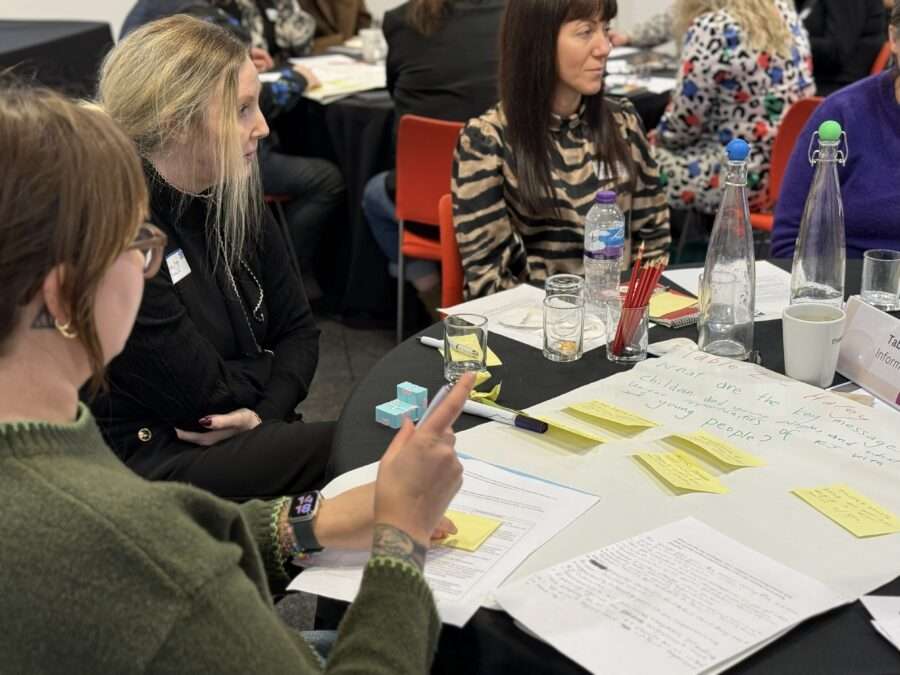
During Restorative Justice Week, on 18 November, and with support from Scottish Government, CYCJ hosted ‘Restorative Justice in Scotland: A Day of Reflection, Learning and Action’, an event with a focus on children and young people. The event was extremely well attended, drawing 80 participants, with more than 100 individuals on the waiting list. Attendees represented a broad range of local authorities, statutory services, third sector partners, and victim support organisations. The programme featured a series of presentations followed by structured round-table discussions facilitated by designated table hosts. Delegates also took part in a design exercise envisioning the future of restorative justice in Scotland, using co-design principles from the Scottish Approach to Service Design and design tools from the Promise Scotland. Feedback was highly positive, including comments noting the value of the reflective practice, rich discussions, and networking opportunities. The event also generated a significant increase in RJ-related enquiries in the days that followed. CYCJ is currently analysing the data captured from the discussions and design exercise and will produce a report for the Scottish Government, with wider dissemination to stakeholders in Quarter 4.
Also during RJ week, on 20 November, both CJS and CYCJ joined an online Q&A event ‘Restorative Justice: Exploring a Highland Model’, organised by Highland Community Justice Partnership, which provided opportunity to expand on themes and areas of interest raised at last quarter’s in-person event in Inverness. Both CJS and CYCJ also continue to support the work of Highland’s RJ Working Group and their partnership approach to developing RJ locally.
In December, CJS and CYCJ jointly delivered a tailored session to the Scottish Quaker’s Community Justice Network, outlining past and current work supporting the Scottish Government’s RJ Action Plan.
If you or your organisation is interested in a tailored restorative justice input or presentation, we’d be happy to join your meeting or event to share insights and support your work. Contact us on Chloe.Boullier-Richards@communityjustice.scot and Lauren.Emmerson@strath.ac.uk
International Collaboration – European Forum for Restorative Justice
CJS continues to contribute to the Forum’s Training Committee, the Communications Committee and the Gender-Based Violence Working Group. This international engagement brings learning, knowledge exchange, and visibility of Scotland’s work within the wider restorative justice field.
In December, CJS took part in the planning meeting for chairs and co-chairs of committees and working groups in Leuven, Belgium. The day-long session focused on identifying shared challenges, exploring collaborative solutions, and strengthening engagement and outreach. Held alongside the Restorative Justice and Arts Festival, the discussions during the meeting were enriched by theatre, film, music, storytelling, exhibitions, and workshops — inspiring innovative ideas for advancing RJ messaging and engaging the public. Experiences and reflections from this visit were captured in a blog: Reflections from Leuven: Sharing Ideas, Shaping Practice.
We also contributed to the landmark new magazine Restorative Justice and Human Rights, curated by the Communications Committee and launched on International Human Rights Day. Our contribution included co-editing the publication and shaping key themes, as well as a featured blog on how restorative justice aligns with fundamental human rights: Restorative Justice and Human Rights: a Facilitator’s Perspective.
The Training Committee continues to review restorative justice training standards and to ensure the long-term sustainability of training provision. The Gender-Based Violence Working Group is progressing the development of specialised training on restorative justice and sexual harm.
Outcome 2: Restorative Justice is delivered by highly trained and skilled facilitators
Restorative Justice Online Learning Module
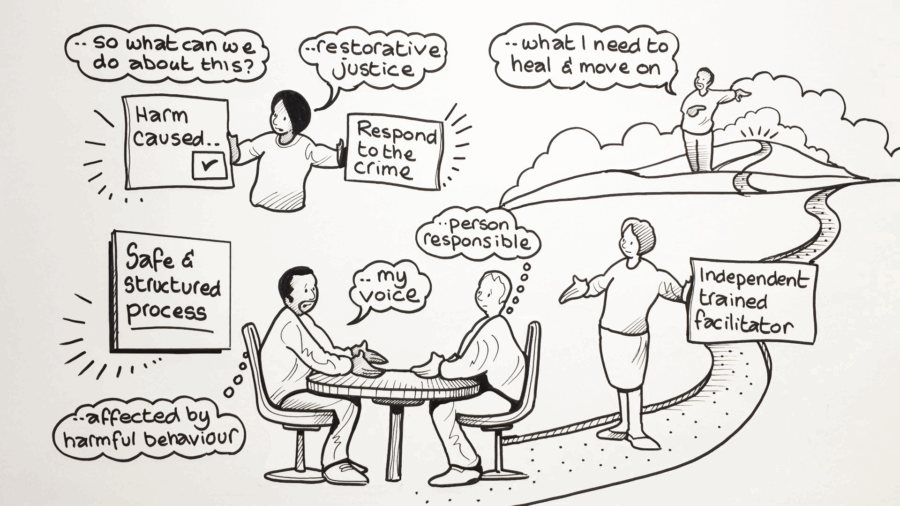
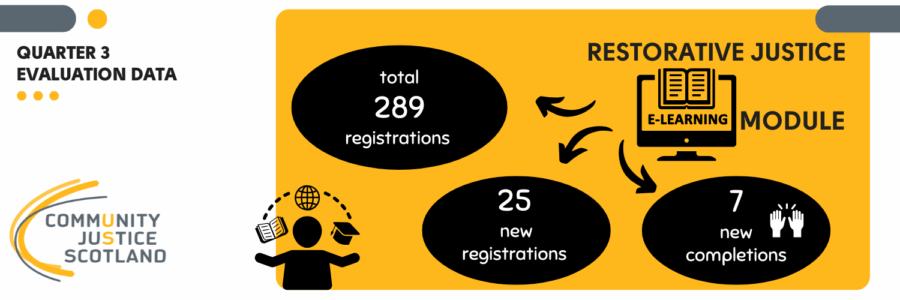
The RJ eLearning Module has been developed by CJS for frontline, operational staff on restorative justice. The content was written by Prof Tim Chapman and Tania Nascimento, designed to offer a basic introduction to and overview of restorative justice. The module is available for stakeholders and the public and can be accessed via both the RJ Learning Hub and Resources section on CJS website.
Restorative Justice and Hate Crime Training
In October, CJS delivered the second half of the four‑day Restorative Justice and Hate Crime training to nine justice workers from Edinburgh, the Highlands, and Dumfries and Galloway. In December, CJS provided the full training programme to ten staff from the Borders Youth Justice Team and the Borders Community Justice Partnership. The training focused on the specific harms associated with hate crime, the support needs of those affected, and how theory can be applied in practice. Grounded in the restorative justice principles taught by Prof Tim Chapman (University of Strathclyde and the European Forum for Restorative Justice), the course prepared participants to facilitate restorative justice interventions.
Restorative Justice Practitioners’ Network
CJS continues to chair the Scottish Restorative Justice Practitioners’ Network which is open to current restorative justice practitioners, those awaiting training or practice opportunities, and individuals with a general interest in restorative justice. A meeting on 4 November 2025 focused on outcome agreements and proportionality.
CYCJ continues to field requests and enquiries from practitioners in the field, linking them in with both the Restorative Justice Practitioner’s Network, and training and practice opportunities across Scotland.
The next meeting will take place on 17 February 2026 and will be looking at creative approaches, particularly in preparation stage. If you would like to take part please contact Gael.Cochrane@communityjustice.scot.
Strategic Development of RJ Training and Accreditation in Scotland
CJS, in partnership with CYCJ, continues to assess options for a more strategic national approach to RJ training in Scotland. During this quarter, both teams met to review opportunities and challenges and to consider potential benefits and implications of introducing accredited RJ training. This work remains ongoing.
Tools and Knowledge Sharing around Restorative Practices
CYCJ continues to chair the bi-monthly Restorative Approaches Group, which includes regular participation from YouthLink Scotland, CJS, and the Violence Reduction Unit. The group serves as a platform for sharing resources, identifying gaps in practice, exploring collaborative opportunities, and advancing a consistent and structured approach to restorative practices across Scotland.
This quarter, the group met three times and, as part of Restorative Justice Week, co-hosted a webinar titled ‘Relational and Restorative Practice: Insight from Scottish Education’, attended by over 70 delegates. The group also continues to update and promote resources on the Education Scotland website.
Outcome 3: There is a public awareness and understanding of Restorative Justice across Scotland
Restorative Justice Exhibition
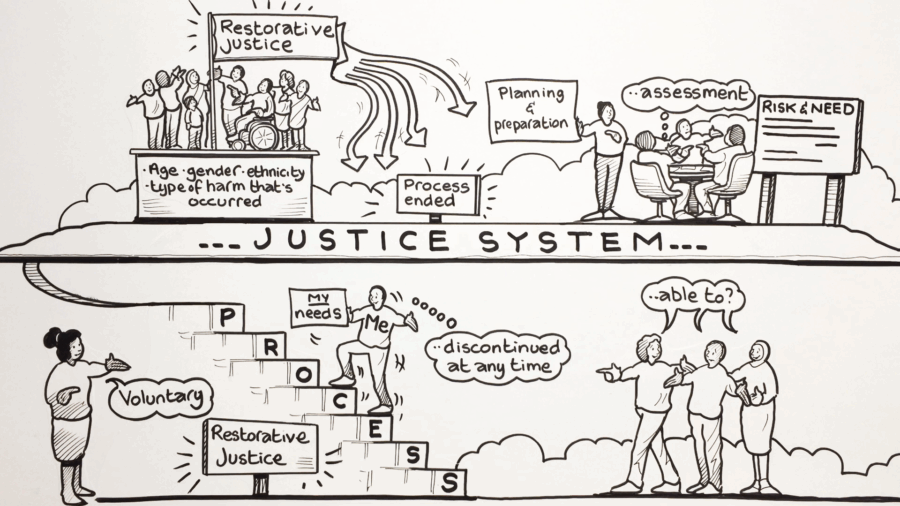
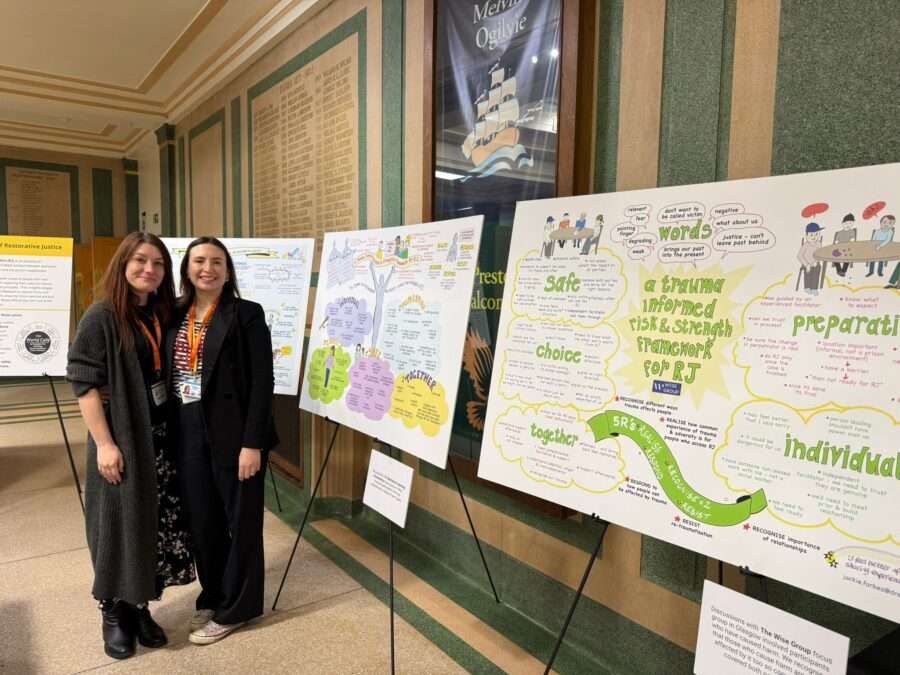
On 7 October, CJS held its national event ‘In the Age of AI, can Justice be Smarter?’, which also featured a Restorative Justice Exhibition. The display showcased graphic illustrations drawn from discussions with people affected by harm – both those who experienced and those who caused harm – exploring their perspectives on the essential features of a trauma-informed restorative justice service. These insights, gathered through World Café consultations in 2023 with support from organisations including Resilience Learning Partnership, Safe Lives, and The Wise Group, have informed Scotland’s forthcoming Restorative Justice Policy and Practice Framework and will continue shaping a trauma-informed, rights-respecting, and person-centred approach to justice.
The exhibition aimed to raise awareness of RJ and foster meaningful dialogue, encouraging reflection on its role in giving people a voice and an active role in determining what justice means to them – particularly as justice systems explore AI-driven innovation. The event was attended by 161 participants.
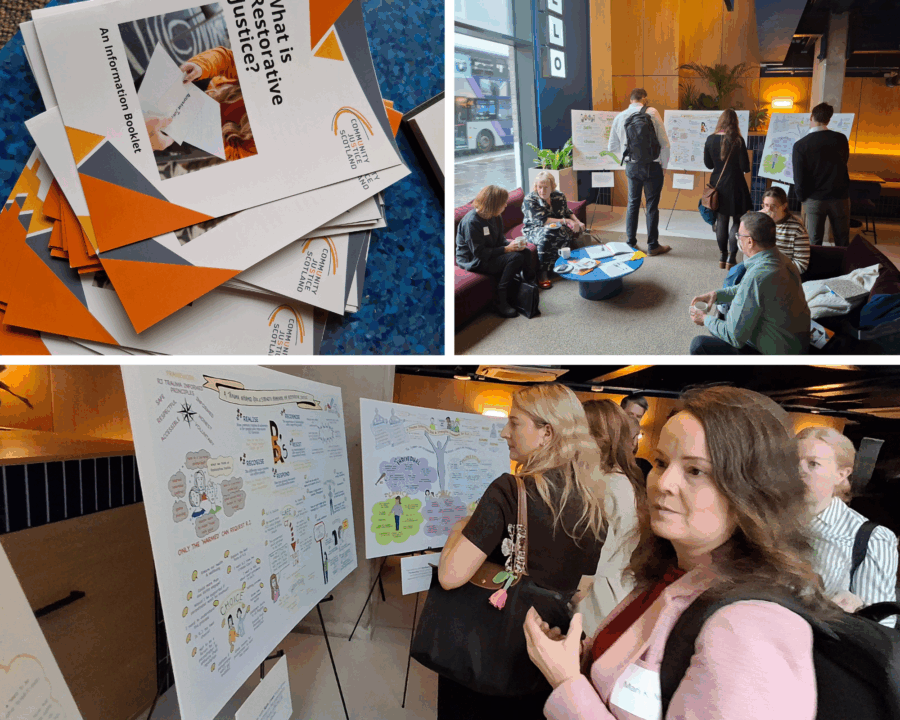
Post-event evaluation received 41 responses, with 26 commenting on the exhibition. Feedback from those who viewed the exhibits was highly positive, describing them as informative, visually engaging, and insightful. Respondents highlighted the need for improving justice experiences for people and the importance of restorative justice in achieving this. The exhibition was seen as a great way to communicate the topic, with suggestions to make the content available online in a shareable format. Following this, CJS invited attendees to request digital access to the illustrations or host physical exhibition at their own events or offices.
If you or your organisation would like to receive digital versions of these illustrations, host the exhibition, or learn more about the research behind it, please contact: Inesa.Velaviciute@communityjustice.scot
Digital Engagement
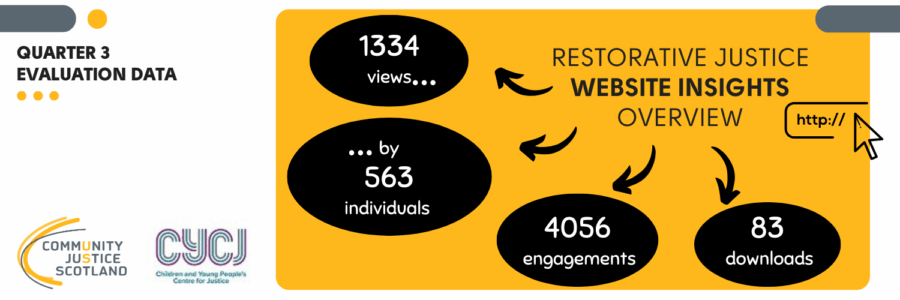
Restorative Justice and Educational Inputs
In December, Community Justice Scotland delivered two introductory presentations on restorative justice and its development in Scotland to Advanced Higher Modern Studies students from Edinburgh and the Lothians at the George Watson’s College Crime and Justice Conference. To support further engagement, the conference also showcased the Restorative Justice Exhibition originally developed for CJS’s national event.
Lived-Experience Short Film
During the test case project, the RJ facilitator supported a person with lived experience of harm to write a letter to the person who harmed them. The restorative process and its outcomes have since developed into a scenario for a creative short narrative film that CJS is supporting to produce.
This quarter, activity has focused on early development, including initial planning meetings and exploring potential collaboration opportunities. We have confirmed a partnership with Media Education, who will work with the person harmed to develop and produce the film. Production is now underway and is scheduled for completion by the end of March.
Restorative Justice Awareness Raising Week
Community Justice Scotland, Children and Young People’s Centre for Justice and Sacro collaborated to develop a coordinated comms plan to maximise reach and impact during Restorative Justice Week (16-22 November). The digital media campaign incorporated themes aligned with the European Forum for Restorative Justice’s focus on RJ and Human Rights, while also providing space for Scotland-specific content and organisational key messages. Further details are provided in the Stakeholder Spotlight section below.
To further strengthen stakeholder engagement and broaden public reach, the working group will maintain this joint communications approach in the coming year and will invite organisations and partnerships to support its messaging.
Stakeholder Spotlight
Restorative Justice Week 2025: Restorative Justice as a Human Right
Restorative Justice Week 2025 took place from 16-22 November, raising awareness among the public and decision-makers, and promoting restorative justice (RJ) to both existing and new audiences across the UK and internationally.
This year’s theme, ‘From Question to Principle: Embedding Restorative Justice in the Human Rights’, explored why restorative justice matters for human rights and how it can be used as a means to uphold them. A unified message shared across multiple countries aimed to amplify the global conversation on RJ’s importance and its transformative potential in helping people affected by crime find a constructive way forward. Community Justice Scotland (CJS), Children and Young People’s Centre for Justice (CYCJ) and Sacro worked in partnership to share key messages and resources on the principles and benefits of restorative justice to individuals and communities, its significance in the context of human rights framework, and RJ’s development in Scotland.
The campaign used diverse multimedia content – including blogs, podcasts, videos, illustrations, service updates, webinars and eLearning, research insights, and professionals’ reflections – distributed across LinkedIn, X, Instagram and Facebook. Across all platforms, the organisations reached over 82k people. Extensive signposting further directed audiences to resources from other organisations, and in-person/online events across the UK and Europe.
Stakeholders and members of the public actively engaged with the content throughout the week, as reflected in the engagement statistics below.

New blog posts generated the highest engagement, reaching over 47k people and producing more than 2,500 interactions across platforms. These included:
- Restorative Justice and Human Rights: a Facilitator’s Perspective – Gael Cochrane, CJS
- Making the Case for Embedding Restorative Justice in Human Rights – Lauren Emmerson, CYCJ
- Strengthening Communities Through Restorative Justice in Highland – Gabrielle Buist, Highland Community Justice Partnership
- Why Restorative Justice Matters – John Nonhebel, Prison Fellowship Scotland
The high reach was supported by CJS’s sponsored LinkedIn promotion, which attracted new audiences who do not usually follow or engage with CJS social media. The blogs also achieved notable international visibility: Gael’s piece was featured in the new European Forum for Restorative Justice magazine on RJ and Human Rights, while Lauren’s blog reached as far as South Australia after being picked up by the SA Police News site.
Video content, including welcome videos from each organisation, along with the RJ animation, was also well received, generating more than 7,000 impressions and strong levels of interaction.
Compared with the previous year, this year’s reduced reach was due to CJS no longer using platform X, which historically generated significant engagement, and a smaller volume of social media content being produced overall. Despite this, the campaign created new and meaningful impact. Notably, it prompted a rise in direct enquiries from the public seeking information on accessing RJ services. In response, CJS established a dedicated RJ‑enquiries inbox, monitored daily, with all contacts recorded in line with GDPR requirements to support ongoing service development.
In addition to digital activity, Sacro delivered an ‘Introduction to Restorative Practice’ training workshop to 13 participants from 12 organisations. Feedback was highly positive, with attendees describing the session as well‑structured and interesting, and rating the delivery as excellent.
Contacts
Community Justice Scotland
- Hannah Dickson – Head of Projects
- Chloe Boullier-Richards – RJ Project Lead
- Inesa Velaviciute – RJ Development Officer
- Michael Purves – RJ Administrative Officer
- Gael Cochrane – Learning Development & Innovation Lead, RJ Practitioner
The Children and Young People’s Centre for Justice
- Lauren Emmerson – RJ Practice Development Advisor
- Pamela Morrison – RJ Practice Development Advisor