Why Restorative Justice Matters
Guest blog by John Nonhebel, Executive Director, Prison Fellowship Scotland
As we mark Restorative Justice Week and Prisoners’ Week, this question feels more urgent than ever. In his work with Prison Fellowship Scotland, John sees firsthand how restorative approaches can transform lives – and why they matter for human rights.
NOTE: The views expressed are of the author and do not necessarily represent the views of Community Justice Scotland and other organisations that may be mentioned.
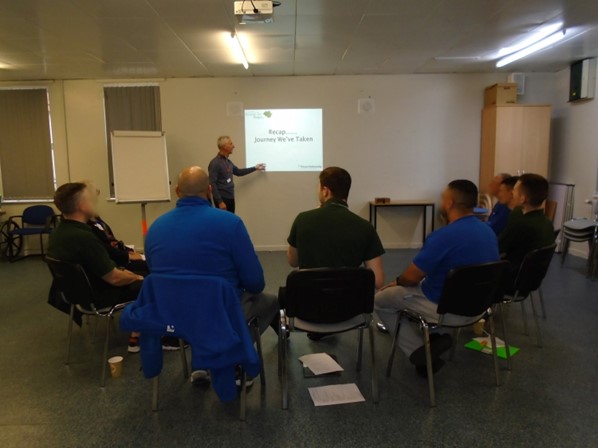
In my work, I am actively involved in delivering our Sycamore Tree Course to men and women in the prisons across Scotland. This year, we have delivered the course to around 400 people. This course focuses on victim awareness and taking responsibility but also looks at the principles of restorative justice (RJ). As we deliver the course, it’s not uncommon to see participants begin to think deeply about the harm they have caused. They become aware of the number of people their actions have affected, and some express a genuine desire to take responsibility and to apologise to those they have hurt.
For those of us in the RJ sector, this is familiar – and powerful. Yet, despite the willingness of many to engage, opportunities for a mediated process between those harmed and those who caused harm remain disappointingly rare.
This year, the European Forum for Restorative Justice announced the theme for Restorative Justice Week as “Restorative Justice as a Human Right.” As I’ve been reading more about this, I’ve found it interesting to see what has been written on this topic and a couple of things stood out.
A right to dignity
A system focused entirely on retribution (not restoration) leaves little space for the dignity of those who caused harm, concentrating predominantly on punishment with little time spent on any sort of rehabilitation. In contrast, Restorative Justice gives space to hear the different voices involved, to look for solutions and how harm can be repaired and by doing so, gives dignity and agency to all – encouraging the restorative process.
An emphasis on rehabilitation and reintegration
The UN Standard Minimum Rules for the Treatment of Prisoners (the Nelson Mandela Rules) emphasise rehabilitation and reintegration as the primary objectives of imprisonment. They highlight empathy as a key factor in reducing reoffending – principles that align closely with restorative justice. This again points towards a restorative justice approach, to creating space for voices to be heard.
But what about the victims of crime, those that have been harmed, what about their rights?
When we work with those who have caused harm, one of the things we look for is a genuine sense of remorse, a feeling of regret about the harm that has happened. As I think more about the idea of a more rights-based approach to restorative justice, I am left wondering how the two things go together. If a person that has caused harm insists on their right to a restorative justice approach – or even their right to say sorry – is there a sense that this may not be accompanied by a true sense of remorse?
So how do Restorative Justice and Human Rights go together?
Our current system leans heavily toward punishment, often stripping agency from everyone involved. Surely we can do better. Even if not framed explicitly as a human right, could stronger legislation move us toward a justice system that prioritises restoration, dignity, and healing?
As we reflect during Restorative Justice Week, perhaps the real question is this: how do we embed restoration – not just retribution – into the heart of justice?
- Also by John Nonhebel: We need to listen to people in the justice system